Author: Nick Cantone

  • 2026 Irvine Election Guide: Meet the Candidates for Mayor and City Council

    2026 Irvine Election Guide: Meet the Candidates for Mayor and City Council

    Irvine voters will choose a mayor and City Council representatives in districts 1, 5 and 6 on Nov. 3, with candidates emphasizing issues that include public safety, housing and development, transportation, environmental policy, neighborhood services and city finances.

    Irvine’s municipal races are nonpartisan, meaning party labels do not appear on the ballot. Political organizations may still endorse candidates, but this guide describes those endorsements as campaign facts rather than assigning partisan labels to the candidates.

    The City of Irvine says the regular nomination period closed Aug. 7. The city’s official nominee information lists the candidates discussed below. The field can still change in one respect: qualified write-in candidates may file between Sept. 7 and Oct. 20.

    Mayor

    Incumbent Mayor Larry Agran is seeking re-election to a two-year term and faces challenger Maksim V. Egorov, a software engineer and business owner. Current candidate listings identify Egorov as having no political party preference. Irvine municipal elections are nonpartisan.

    Maksim V. Egorov. In the candidate statement provided to the Irvine Times, Egorov says his decision to run was inspired by protecting Irvine’s open space, serving residents and planning responsibly for the future. He describes his professional background as a software engineer focused on solving problems, improving quality and delivering results. He also says he serves on his neighborhood homeowners association board and has volunteered on the School Site Council and English Learner Advisory Committee at his children’s Irvine school.

    Egorov’s stated priorities include fiscal responsibility, stronger budget oversight, long-term budget stability, open-space protection, public safety, innovation and mobility improvements. He also says residents should have an opportunity to vote on the future of Irvine’s open space. His candidate statement concludes: “I will lead with integrity and be a Mayor for all of Irvine.”

    Larry Agran. Agran is the incumbent mayor and is seeking another term. This guide treats the mayoral contest the same way as the council races: candidate positions and priorities should be attributed to campaign materials, public records or direct candidate responses rather than inferred from party affiliation.

    District 1

    District 1 features incumbent Councilmember Melinda Liu, former Irvine Mayor Sukhee Kang and John Park.

    Melinda Liu. Liu was elected to the council in 2024. Her campaign highlights public safety and infrastructure, economic opportunity and fiscal responsibility, neighborhood and family issues, and transparent government. Her campaign also points to pedestrian-safety initiatives and efforts to increase community participation at City Hall. In describing her approach, Liu says she believes Irvine succeeds when local leadership is “transparent, inclusive, and accountable.”

    Sukhee Kang. Kang previously served on the Irvine City Council and as mayor. His campaign focuses on open-space protection, community amenities and environmental improvements in District 1. His published plans include a new library and community center and a proposal to plant tens of thousands of trees. Kang says he is running to provide “steady, proven leadership focused on results, accountability, and Irvine’s future.”

    John Park. Park’s campaign emphasizes city spending, responsiveness to residents and what he calls commonsense leadership. Park has received support from Republican organizations, including the Republican Party of Orange County. On his campaign website, Park summarizes his governing philosophy this way: “Listen to the people you serve, spend their tax dollars wisely, and never forget why you ran in the first place.”

    District 5

    The District 5 ballot includes incumbent Betty Martinez Franco, former Councilmember Anthony Kuo, Steven Alves, Byron Salvatierra and Julie Glossbrenner.

    Betty Martinez Franco. Martinez Franco won the District 5 seat in a 2025 special election. Her campaign emphasizes affordability, representation and the cost of living. Her campaign website describes her as focused on pushing back against Irvine’s rising cost of living. Public endorsement listings show support from Democratic organizations, including the Democratic Party of Orange County, as well as labor and advocacy groups.

    Anthony Kuo. Kuo previously served on the Irvine City Council and has also served on the city’s Finance Commission. His campaign materials emphasize public safety, affordability and fiscal responsibility, including scrutiny of city spending.

    Steven Alves. Alves, a longtime Irvine resident who previously served as chief of staff to Vice Mayor James Mai, is campaigning on public safety, fiscal restraint, infrastructure and neighborhood issues. His campaign says he wants to bring “disciplined leadership and fiscal restraint” to the council. His published endorsements include the Republican Party of Orange County, the Lincoln Club of Orange County and Greater Irvine Republicans.

    Byron Salvatierra. Salvatierra is an Iraq War Army veteran and cybersecurity professional who has also worked as a public safety assistant for the Irvine Police Department and serves as a reserve firefighter with the Orange County Fire Authority. His campaign lists community connection, safety, government accountability, affordability and sustainability among his priorities. Explaining his candidacy, Salvatierra says he believes stronger communities are built by residents “banding together with our individual abilities.”

    Julie Glossbrenner. Glossbrenner is listed as a District 5 candidate and is identified in current candidate listings as a housing specialist. Available election listings identify her as having no political party preference. This guide avoids attributing additional policy positions to her without a campaign statement or other primary-source material supporting them.

    District 6

    District 6 features Councilmember Kathleen Treseder and Scotty Hong.

    Kathleen Treseder. Treseder, a UC Irvine professor who has served on the council at large since 2022, has been closely associated with environmental and sustainability issues during her time in city government. Public endorsement information shows support from the Democratic Party of Orange County. This guide does not characterize that endorsement as a substitute for her positions on Irvine-specific issues.

    Scotty Hong. Hong has worked as a policy adviser to Mayor Larry Agran and has served on Irvine’s Sustainability Commission. His campaign highlights public safety, transportation, sidewalk completion, neighborhood services and development. Hong says he is seeking to bring “disciplined, neighborhood-first leadership to City Hall.” His District 6 plan also focuses on the Jamboree corridor, Irvine CONNECT and public-safety presence.

    Key issue: Irvine’s finances and the city budget

    City finances are likely to remain a major issue during the campaign. Irvine’s adopted 2025-27 biennial budget originally projected General Fund revenues and transfers of about $298.1 million for fiscal year 2025-26 and about $311.9 million for 2026-27. That represents an increase of roughly $13.8 million, or about 4.6%, between the two fiscal years. The same adopted plan projected General Fund expenditures and transfers of about $298.0 million in 2025-26 and $311.8 million in 2026-27.

    The financial picture is still developing. In June, the city considered mid-cycle budget adjustments, including roughly $6.2 million in additional 2025-26 General Fund expenditures paired with approximately $6.3 million in revenues. The city has also scheduled a Sept. 22 special City Council meeting specifically on the General Fund structural deficit, followed by an Oct. 14 community budget workshop.

    That makes the budget a concrete issue for voters to examine across all three council races: how candidates would balance service levels, public safety, infrastructure, development-related needs and long-term fiscal stability. Rather than assuming what each candidate would cut, preserve or expand, the Irvine Times can ask every candidate the same budget questions and publish their answers side by side.

  • Irvine Seeks California ‘Prohousing’ Designation

    Irvine Seeks California ‘Prohousing’ Designation

    Irvine is seeking recognition from the state as a “Prohousing” community, a designation that could give the city an advantage when competing for state money for affordable housing, infrastructure and transportation projects.

    The city is preparing an application for the California Department of Housing and Community Development’s Prohousing Designation Program, an initiative intended to reward cities and counties that go beyond minimum state housing requirements to encourage development.

    Irvine opened its draft application for public review July 23. Residents have until Sept. 22 to submit comments before the application is expected to go before the City Council.

    The state created the Prohousing Designation Program following the 2019-20 budget as California sought new ways to address its longstanding housing shortage. Rather than simply requiring communities to comply with housing laws, the voluntary program offers financial incentives to jurisdictions willing to take additional steps to make housing easier and less expensive to build.

    To qualify, Irvine must earn at least 30 points under a state scoring system. The application evaluates policies in four areas: zoning and land use, reducing the amount of time needed to approve and build housing, lowering development and construction costs, and providing financial assistance for housing.

    Communities can also receive credit for policies addressing issues such as fair housing, climate resilience and displacement.

    For Irvine, the potential financial benefits are significant. A designation would make the city eligible to compete for Prohousing Incentive Program funding. Prohousing communities can also receive additional points or priority consideration for several state programs funding infrastructure, transportation and community development.

    That does not mean receiving the designation automatically delivers Irvine a pot of state money. Instead, it can improve the city’s position when competing against other jurisdictions for certain grants.

    Irvine would not be the first Orange County community to receive the distinction. Brea became the county’s first Prohousing city in 2024 after demonstrating policies that included encouraging accessory dwelling units, establishing an affordable housing trust fund and creating incentives for combining smaller parcels for mixed-use development. Santa Ana has since received the designation as well.

    Statewide, the program has expanded considerably. As of March 2026, the state listed 74 designated jurisdictions, including Los Angeles, San Francisco, Sacramento, Oakland, Berkeley, Long Beach and Santa Monica.

    The experiences of Los Angeles and San Francisco, however, demonstrate both the potential benefits and limitations of Prohousing status.

    Los Angeles received its designation in March 2023. Mayor Karen Bass said at the time that the city needed to accelerate housing construction.

    “We have to build more, faster,” Bass said when the designation was announced.

    Prohousing status can provide Los Angeles with additional points when it competes for certain state housing and infrastructure grants. The city has subsequently secured significant state funding for housing and infill development, although those awards cannot be attributed solely to its Prohousing designation.

    San Francisco presents a more complicated example.

    Before receiving its designation in October 2024, San Francisco underwent an extensive review by state housing officials. HCD concluded in 2023 that the city had some of California’s longest housing approval timelines and identified local permitting procedures, discretionary reviews and other practices as barriers to housing construction.

    The state ultimately identified 18 actions San Francisco needed to take to improve its housing approval process.

    San Francisco later reduced hearings for certain housing developments, changed permitting procedures and limited some appeals. But the process was not without conflict. In November 2023, HCD issued a corrective-action letter after the city missed deadlines associated with several required reforms.

    By the following year, state officials said San Francisco had made sufficient progress, and the city received its Prohousing designation.

    The experience highlights an important limitation of the program. Becoming Prohousing does not necessarily mean a city’s housing affordability or production problems disappear.

    San Francisco continues to struggle to translate zoning capacity and housing approvals into completed homes. High land prices, construction costs, interest rates and financing difficulties can prevent projects from moving forward even after regulatory barriers are removed.

    Los Angeles also continues to face severe affordability and homelessness challenges despite receiving its designation more than three years ago.

    Irvine enters the process from a considerably different position. Unlike San Francisco, its Prohousing application has not followed a sweeping state investigation requiring the city to overhaul its housing approval system. Instead, Irvine is seeking credit for policies already in place while also committing to additional measures that could qualify it for the designation.

    The comparison also underscores a larger debate surrounding California housing policy.

    Supporters argue that Prohousing provides an incentive for local governments to remove unnecessary barriers to construction while rewarding communities willing to address the state’s housing shortage.

    Critics, however, have questioned whether tying access to state funding to local housing policies gives Sacramento too much influence over decisions traditionally controlled by cities. There is also debate over whether increasing the number of homes that can be built will necessarily translate into housing that middle- and lower-income residents can afford.

    The designation itself does not guarantee Irvine a specific amount of money, nor does it guarantee additional housing will be built. Instead, it recognizes policies intended to encourage production and gives participating communities advantages when competing for certain state resources.

    For Irvine, applying also means committing to follow through. Cities can receive points for certain policies they plan to adopt, but those policies generally must be implemented within two years of submitting the application.

    Residents will have opportunities to weigh in before that happens. The Planning Commission is scheduled to receive a presentation on the application Aug. 20, followed by a City Council hearing Sept. 22. Irvine expects to submit its formal application to HCD following the public process.

    The experiences of Los Angeles and San Francisco suggest Prohousing designation may be more effective at changing government policy and improving access to funding than guaranteeing housing production.

    For Irvine, the question is whether embracing those policies and incentives can help make housing more attainable while balancing the infrastructure, transportation and neighborhood concerns that accompany continued growth.

  • Irvine Global Village Festival Celebrates 25 Years

    Irvine Global Village Festival Celebrates 25 Years

    What began as a small gathering designed to celebrate Irvine’s growing diversity has become one of the city’s signature annual events. This year, the Irvine Global Village Festival is celebrating its 25th anniversary, marking a quarter-century of bringing residents together through food, music, art and cultural traditions.

    The festival’s roots date to 1998, when a group of Irvine residents helped launch the Multicultural Festival at the Lakeview Senior Center. Within a few years, the event had outgrown its original home and moved to the Irvine Civic Center, where it became the Irvine Global Village Festival.

    Continued growth eventually required another move. In 2005, the festival relocated to Colonel Bill Barber Marine Corps Memorial Park, providing additional space for a growing number of visitors, vendors and attractions.

    By 2011, attendance had increased from about 4,000 visitors to more than 20,000. The festival moved again in 2018, this time to the Great Park, where it has continued to serve as a gathering place for Irvine’s diverse population.

    “What started as a vision of the Irvine Multicultural Association at the Lakeview Senior Center to celebrate and bring Irvine’s diverse cultures together has now turned into the city’s and Orange County’s signature cultural event,” founding festival member Wendy Brown said.

    The festival itself has evolved along with its attendance. Over the years, organizers have added cultural displays, live music, children’s activities, sports and games.

    This year’s 25th anniversary celebration will look back at that history while continuing to showcase the cultures that have helped shape Irvine.

    Visitors will be able to walk through a “memory lane” featuring a commemorative video documentary chronicling the festival’s history. A special anniversary exhibit will also include photographs, stories and memorable quotes from the event’s first 25 years.

    Organizers are also introducing a Cultural Corner stage, giving visitors an opportunity to experience ceremonial and traditional practices in a more intimate setting.

    For those who have watched the festival grow, however, its legacy extends beyond attendance numbers and attractions.

    Brown said the festival’s greatest accomplishment has been establishing itself as a resident- and community-driven celebration.

    “What began as a grassroots effort has continually expanded through the passion, participation, and support of Irvine’s diverse community,” Brown said.

    Founding festival member Greta Jacobs said the celebration also gives residents an opportunity to experience traditions and cultures they might not otherwise encounter.

    “The more opportunities we have to meet people from different cultures, the more people’s perspectives will change,” Jacobs said.

    Twenty-five years after residents first envisioned a local multicultural celebration, the Irvine Global Village Festival has grown alongside the city itself. Although its crowds, activities and footprint have expanded, its original mission remains much the same: bringing Irvine’s many cultures together and giving residents an opportunity to learn more about their neighbors.


  • Irvine’s Largest Pedestrian Bridge Opens

    Irvine’s Largest Pedestrian Bridge Opens

    For years, Interstate 5 has acted as more than just a freeway running through Irvine. For bicyclists and pedestrians, it has also been a barrier, separating portions of the city’s trail network and forcing riders onto busy streets and across freeway ramps.

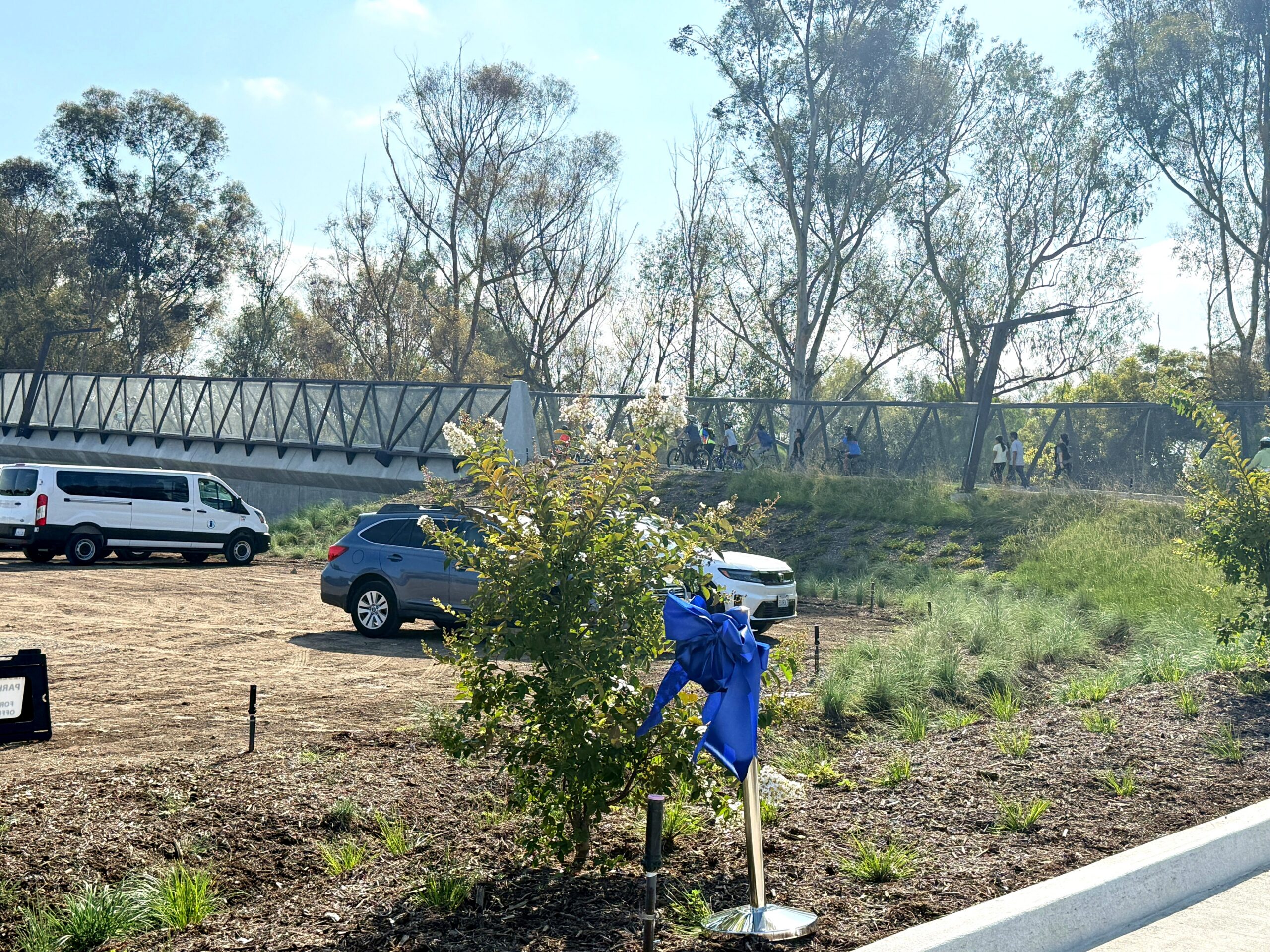
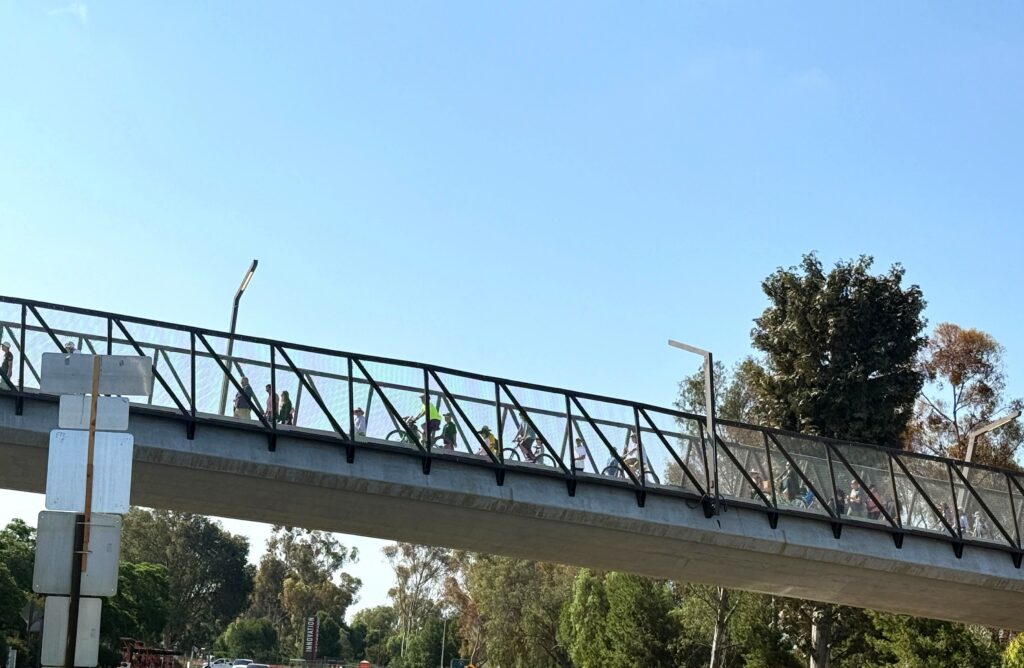
    That changes Tuesday, when Irvine officially opens the new Jeffrey Open Space Trail Bicycle and Pedestrian Bridge, a nearly 1,200-foot span carrying walkers and cyclists over I-5, Walnut Avenue and a Caltrans Park & Ride lot.

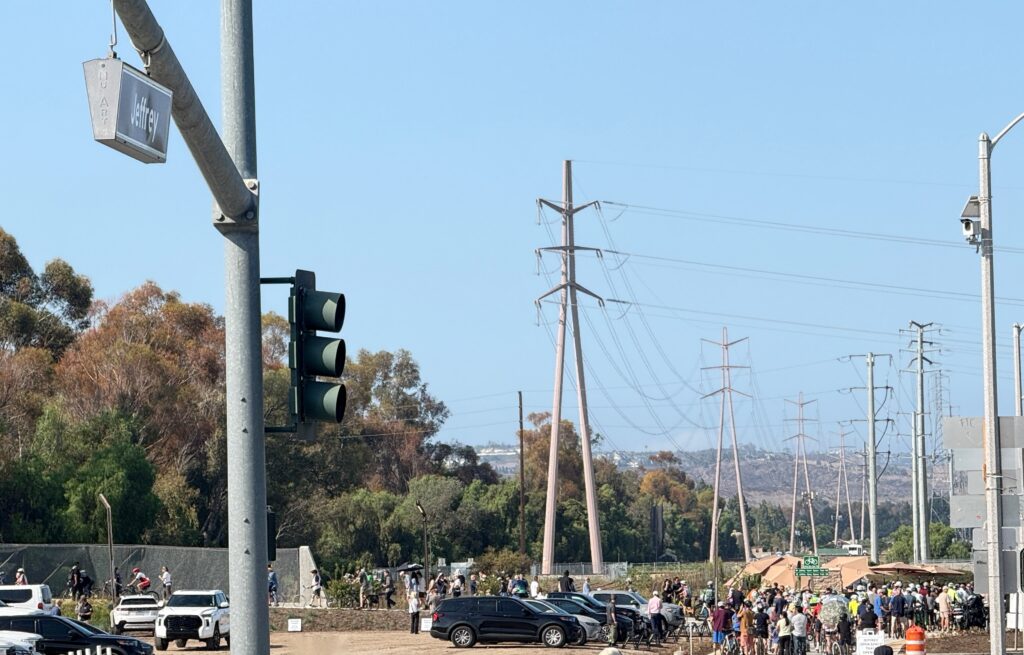
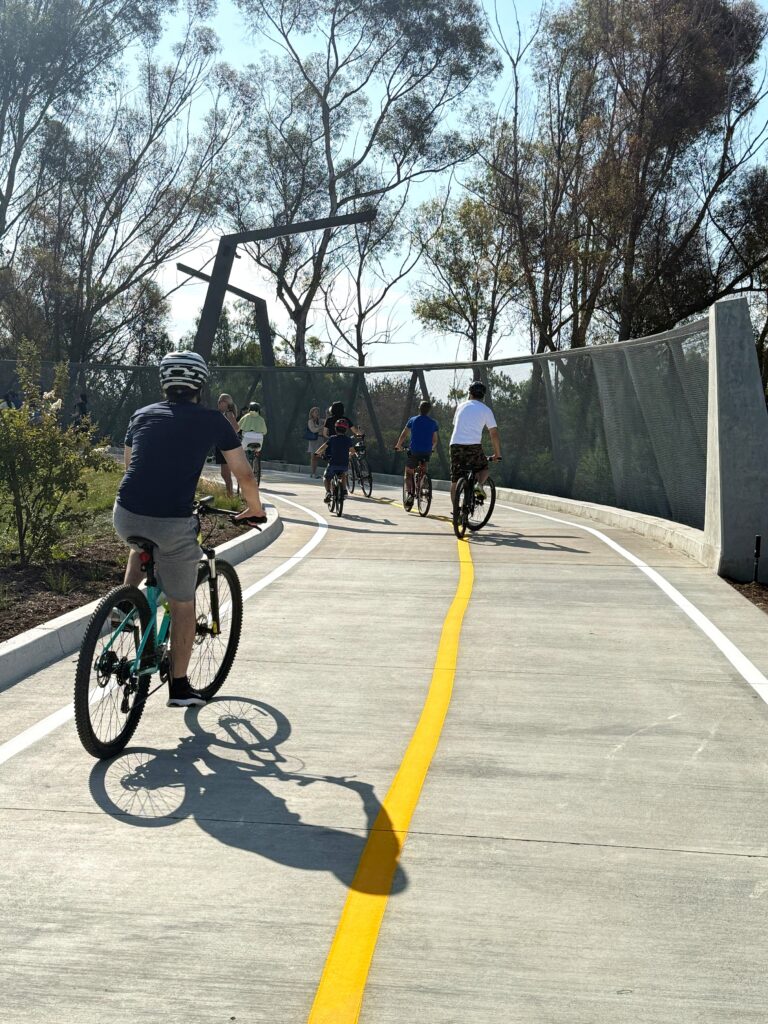
    The bridge, which the city says is the largest in Irvine, is 15 feet wide and will connect the existing Jeffrey Open Space Trail and Cypress Village Trail north of the freeway with the trail extension to the south. A ribbon-cutting ceremony is scheduled from 9 to 10 a.m. at the bridge entrance near Jeffrey Road and Walnut Avenue.

     Beyond the size of the bridge itself, the project closes one of the most significant gaps in a much larger trail system that Irvine officials say eventually links pathways stretching from the Pacific Ocean toward the Santa Ana Mountains and Cleveland National Forest.

    The Jeffrey Open Space Trail originally opened as a 3.5-mile trail in 2015. Work on the current extension and bridge began in March 2024 and includes a new segment running between Barranca Parkway and Walnut Avenue. The extension adds about 1.5 miles to the JOST system.

    For cyclists, the significance of the project is not necessarily the additional mileage, but what they no longer have to cross.

    Before the bridge, longer trips through Irvine could require riders to leave protected trails and contend with surface streets and freeway ramps. Voice of OC reported last year that some cyclists using the area were dealing with cars traveling around 55 mph as well as vehicles entering and exiting I-5.

    The trail can already be used for trips between areas such as UC Irvine and Woodbury Town Center, according to Voice of OC, although gaps in the network have made longer trips more difficult. The new bridge creates a Class I bicycle and pedestrian connection, meaning users are separated from automobile traffic.

    When Irvine presented the project to the City Council in November 2023, the estimated total cost of the bridge project was $30.6 million. That included a $23.1 million construction contract with Guy F. Atkinson Construction, approximately $2 million in design engineering, $2.5 million in construction engineering and additional money for administration and contingencies.

    The project was financed through several sources rather than one city account. The 2023 funding plan included approximately $5.1 million from a federal Bicycle Corridor Improvement Program grant, $10 million from a California grant, $8.7 million from the city’s Systems Development Fund and $3.7 million from Irvine Recovery Fund money, among other sources.

    Separately, Irvine received a $14.5 million state budget allocation in 2021 to help complete the Jeffrey Open Space Trail system, including the extension between Barranca Parkway and I-5.

    The price of the overall work also continued to grow.

    In October 2025, the Irvine City Council approved an additional $4.812 million in M2 Fairshare transportation funds for the project. That included a $3.75 million change order to Guy F. Atkinson for construction of the JOST extension and another $1.062 million for additional construction-management services from T.Y. Lin International.

    Adding the later appropriation to the original $30.6 million project budget brings authorized funding associated with the work to more than $35 million, although that does not necessarily mean the final project expenditure will equal that amount. The $3.75 million change order was specifically identified as funding construction of the trail extension, making it important to distinguish the cost of the bridge itself from the broader extension project.

    The bridge is also considerably more complex than a typical pedestrian overpass.

    City plans describe a 1,190-foot concrete box-girder structure supported by six columns and two abutments. It includes lighting, retaining walls, landscaping, fencing and other architectural elements designed to match the Jeffrey Open Space Trail. The walking surface itself is 15 feet wide, while the overall bridge structure is about 21 feet wide.

    The engineering of the bridge has already received recognition. The Orange County branch of the American Society of Civil Engineers named the JOST bridge its 2026 Outstanding Bridge Project, highlighting its seismic design and role as a missing link in the regional trail system.

    The opening also comes later than at least one earlier expectation. In April 2025, Voice of OC reported that the project was expected to be completed in March 2026. The bridge will instead open Aug. 11, roughly five months later.

    The city’s current announcement does not explain the change in timing.

    Despite the completion of the bridge, Irvine’s larger trail vision does not simply end Tuesday. The new crossing removes one of the most difficult barriers in the network, but the JOST is ultimately one piece of a broader collection of interconnected bicycle and pedestrian routes.

    Where Interstate 5 once posed a major challenge to cyclists and pedestrians, they will now be able to travel directly over it with the freeway traffic moving beneath them.