Category: Local

  • Irvine Seeks California ‘Prohousing’ Designation

    Irvine Seeks California ‘Prohousing’ Designation

    Irvine is seeking recognition from the state as a “Prohousing” community, a designation that could give the city an advantage when competing for state money for affordable housing, infrastructure and transportation projects.

    The city is preparing an application for the California Department of Housing and Community Development’s Prohousing Designation Program, an initiative intended to reward cities and counties that go beyond minimum state housing requirements to encourage development.

    Irvine opened its draft application for public review July 23. Residents have until Sept. 22 to submit comments before the application is expected to go before the City Council.

    The state created the Prohousing Designation Program following the 2019-20 budget as California sought new ways to address its longstanding housing shortage. Rather than simply requiring communities to comply with housing laws, the voluntary program offers financial incentives to jurisdictions willing to take additional steps to make housing easier and less expensive to build.

    To qualify, Irvine must earn at least 30 points under a state scoring system. The application evaluates policies in four areas: zoning and land use, reducing the amount of time needed to approve and build housing, lowering development and construction costs, and providing financial assistance for housing.

    Communities can also receive credit for policies addressing issues such as fair housing, climate resilience and displacement.

    For Irvine, the potential financial benefits are significant. A designation would make the city eligible to compete for Prohousing Incentive Program funding. Prohousing communities can also receive additional points or priority consideration for several state programs funding infrastructure, transportation and community development.

    That does not mean receiving the designation automatically delivers Irvine a pot of state money. Instead, it can improve the city’s position when competing against other jurisdictions for certain grants.

    Irvine would not be the first Orange County community to receive the distinction. Brea became the county’s first Prohousing city in 2024 after demonstrating policies that included encouraging accessory dwelling units, establishing an affordable housing trust fund and creating incentives for combining smaller parcels for mixed-use development. Santa Ana has since received the designation as well.

    Statewide, the program has expanded considerably. As of March 2026, the state listed 74 designated jurisdictions, including Los Angeles, San Francisco, Sacramento, Oakland, Berkeley, Long Beach and Santa Monica.

    The experiences of Los Angeles and San Francisco, however, demonstrate both the potential benefits and limitations of Prohousing status.

    Los Angeles received its designation in March 2023. Mayor Karen Bass said at the time that the city needed to accelerate housing construction.

    “We have to build more, faster,” Bass said when the designation was announced.

    Prohousing status can provide Los Angeles with additional points when it competes for certain state housing and infrastructure grants. The city has subsequently secured significant state funding for housing and infill development, although those awards cannot be attributed solely to its Prohousing designation.

    San Francisco presents a more complicated example.

    Before receiving its designation in October 2024, San Francisco underwent an extensive review by state housing officials. HCD concluded in 2023 that the city had some of California’s longest housing approval timelines and identified local permitting procedures, discretionary reviews and other practices as barriers to housing construction.

    The state ultimately identified 18 actions San Francisco needed to take to improve its housing approval process.

    San Francisco later reduced hearings for certain housing developments, changed permitting procedures and limited some appeals. But the process was not without conflict. In November 2023, HCD issued a corrective-action letter after the city missed deadlines associated with several required reforms.

    By the following year, state officials said San Francisco had made sufficient progress, and the city received its Prohousing designation.

    The experience highlights an important limitation of the program. Becoming Prohousing does not necessarily mean a city’s housing affordability or production problems disappear.

    San Francisco continues to struggle to translate zoning capacity and housing approvals into completed homes. High land prices, construction costs, interest rates and financing difficulties can prevent projects from moving forward even after regulatory barriers are removed.

    Los Angeles also continues to face severe affordability and homelessness challenges despite receiving its designation more than three years ago.

    Irvine enters the process from a considerably different position. Unlike San Francisco, its Prohousing application has not followed a sweeping state investigation requiring the city to overhaul its housing approval system. Instead, Irvine is seeking credit for policies already in place while also committing to additional measures that could qualify it for the designation.

    The comparison also underscores a larger debate surrounding California housing policy.

    Supporters argue that Prohousing provides an incentive for local governments to remove unnecessary barriers to construction while rewarding communities willing to address the state’s housing shortage.

    Critics, however, have questioned whether tying access to state funding to local housing policies gives Sacramento too much influence over decisions traditionally controlled by cities. There is also debate over whether increasing the number of homes that can be built will necessarily translate into housing that middle- and lower-income residents can afford.

    The designation itself does not guarantee Irvine a specific amount of money, nor does it guarantee additional housing will be built. Instead, it recognizes policies intended to encourage production and gives participating communities advantages when competing for certain state resources.

    For Irvine, applying also means committing to follow through. Cities can receive points for certain policies they plan to adopt, but those policies generally must be implemented within two years of submitting the application.

    Residents will have opportunities to weigh in before that happens. The Planning Commission is scheduled to receive a presentation on the application Aug. 20, followed by a City Council hearing Sept. 22. Irvine expects to submit its formal application to HCD following the public process.

    The experiences of Los Angeles and San Francisco suggest Prohousing designation may be more effective at changing government policy and improving access to funding than guaranteeing housing production.

    For Irvine, the question is whether embracing those policies and incentives can help make housing more attainable while balancing the infrastructure, transportation and neighborhood concerns that accompany continued growth.
  • Irvine’s Largest Pedestrian Bridge Opens

    Irvine’s Largest Pedestrian Bridge Opens

    For years, Interstate 5 has acted as more than just a freeway running through Irvine. For bicyclists and pedestrians, it has also been a barrier, separating portions of the city’s trail network and forcing riders onto busy streets and across freeway ramps.

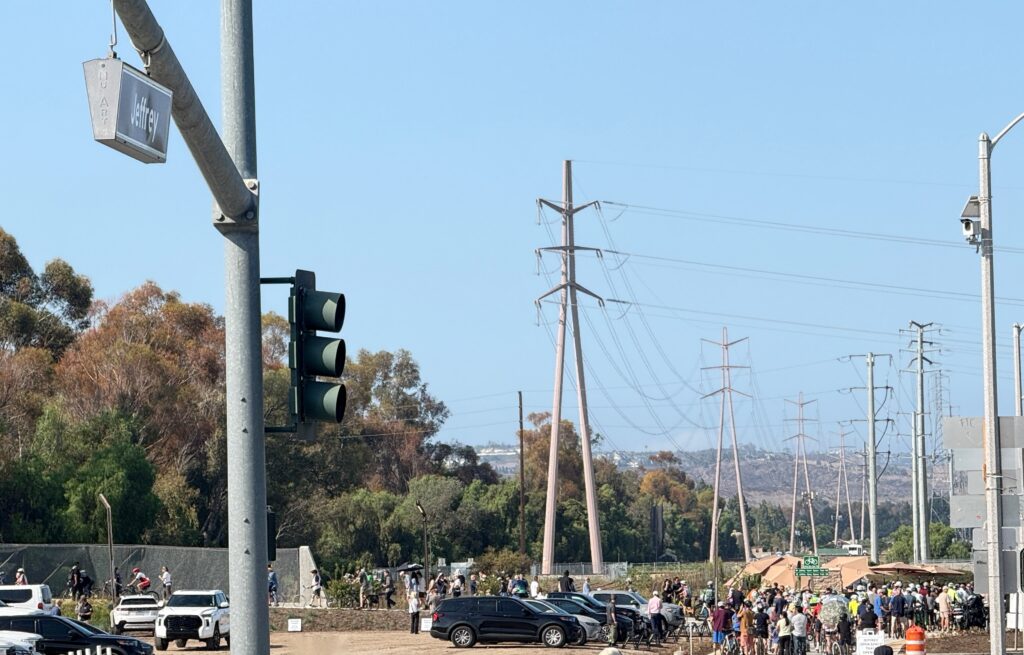
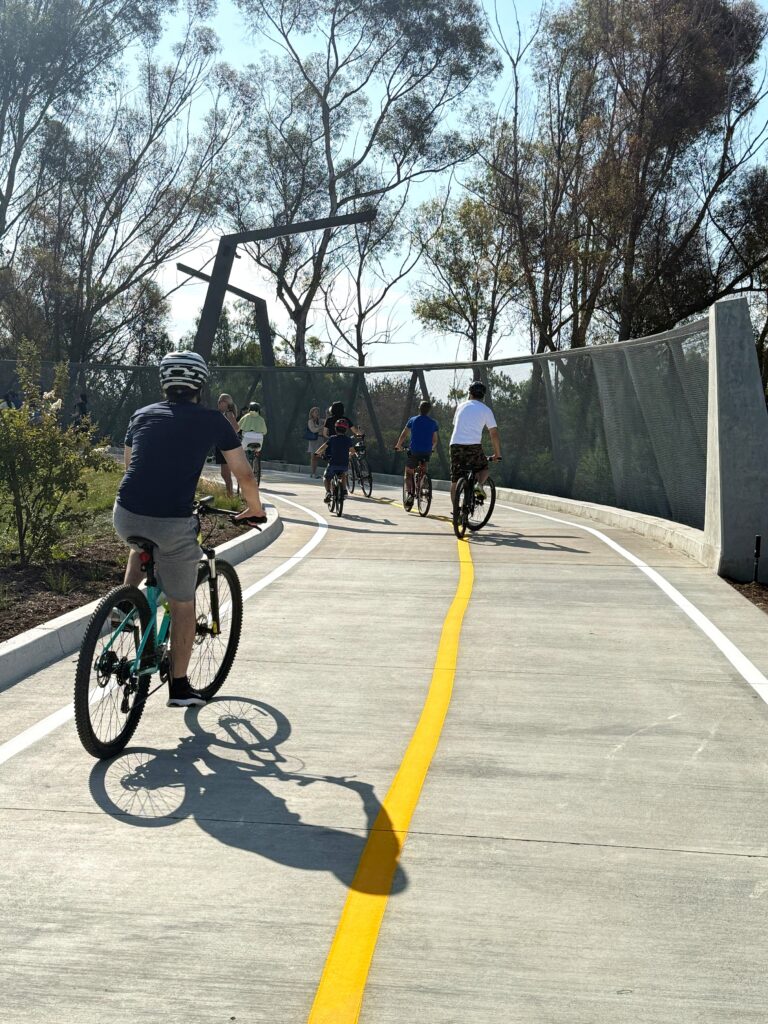
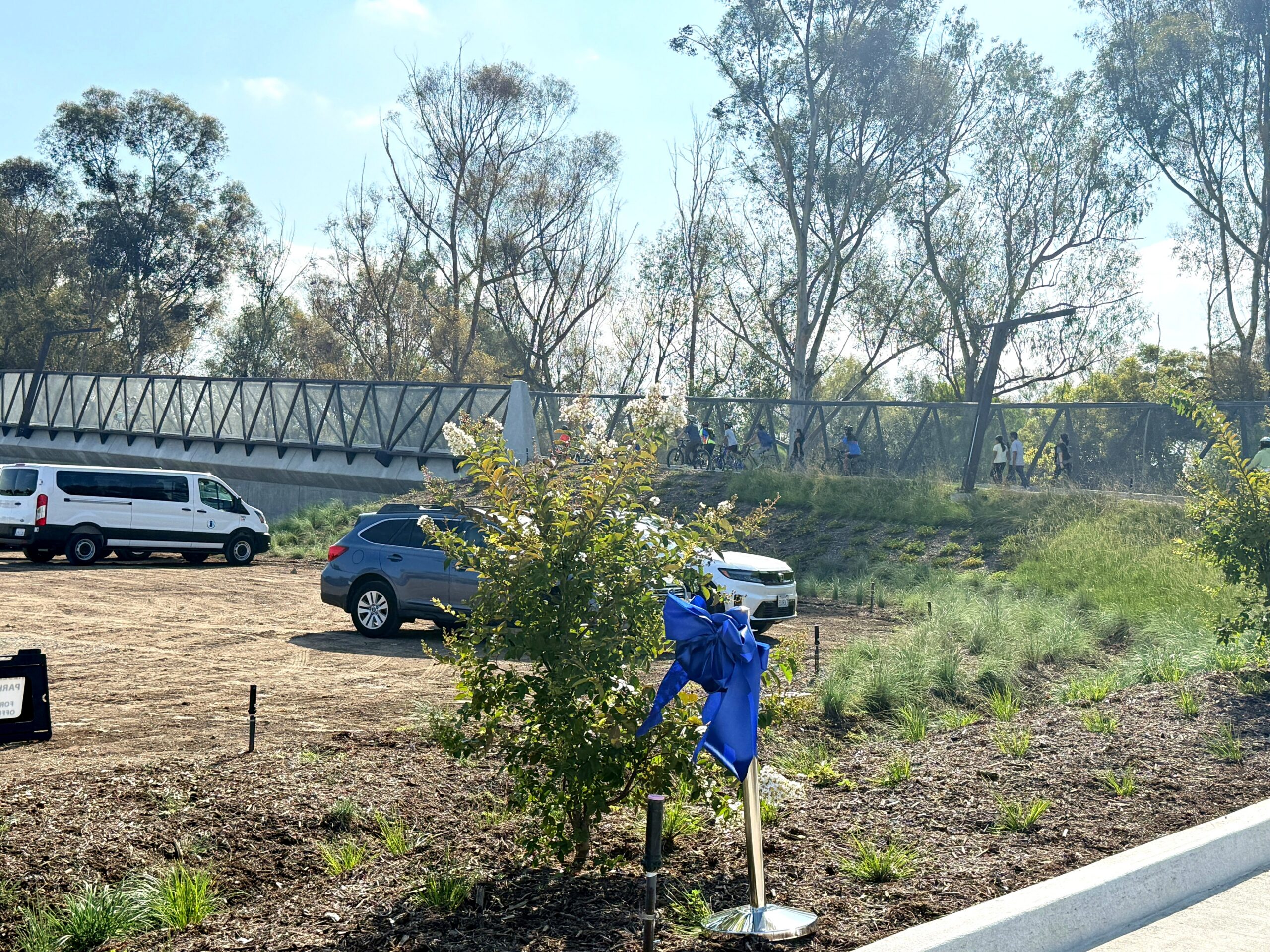
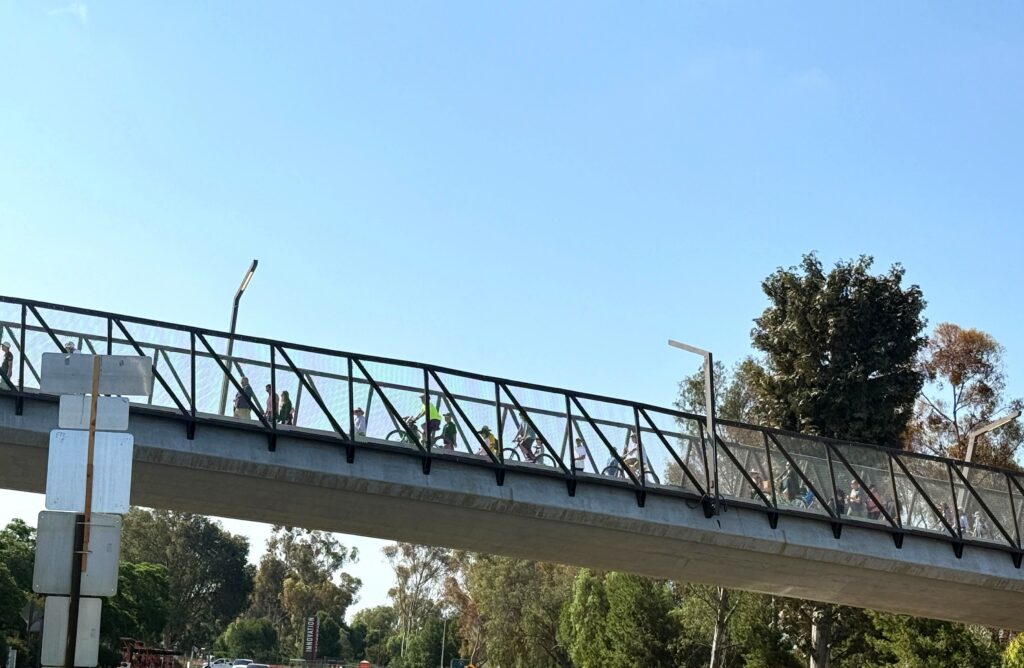
    That changes Tuesday, when Irvine officially opens the new Jeffrey Open Space Trail Bicycle and Pedestrian Bridge, a nearly 1,200-foot span carrying walkers and cyclists over I-5, Walnut Avenue and a Caltrans Park & Ride lot.

    The bridge, which the city says is the largest in Irvine, is 15 feet wide and will connect the existing Jeffrey Open Space Trail and Cypress Village Trail north of the freeway with the trail extension to the south. A ribbon-cutting ceremony is scheduled from 9 to 10 a.m. at the bridge entrance near Jeffrey Road and Walnut Avenue.

     Beyond the size of the bridge itself, the project closes one of the most significant gaps in a much larger trail system that Irvine officials say eventually links pathways stretching from the Pacific Ocean toward the Santa Ana Mountains and Cleveland National Forest.

    The Jeffrey Open Space Trail originally opened as a 3.5-mile trail in 2015. Work on the current extension and bridge began in March 2024 and includes a new segment running between Barranca Parkway and Walnut Avenue. The extension adds about 1.5 miles to the JOST system.

    For cyclists, the significance of the project is not necessarily the additional mileage, but what they no longer have to cross.

    Before the bridge, longer trips through Irvine could require riders to leave protected trails and contend with surface streets and freeway ramps. Voice of OC reported last year that some cyclists using the area were dealing with cars traveling around 55 mph as well as vehicles entering and exiting I-5.

    The trail can already be used for trips between areas such as UC Irvine and Woodbury Town Center, according to Voice of OC, although gaps in the network have made longer trips more difficult. The new bridge creates a Class I bicycle and pedestrian connection, meaning users are separated from automobile traffic.

    When Irvine presented the project to the City Council in November 2023, the estimated total cost of the bridge project was $30.6 million. That included a $23.1 million construction contract with Guy F. Atkinson Construction, approximately $2 million in design engineering, $2.5 million in construction engineering and additional money for administration and contingencies.

    The project was financed through several sources rather than one city account. The 2023 funding plan included approximately $5.1 million from a federal Bicycle Corridor Improvement Program grant, $10 million from a California grant, $8.7 million from the city’s Systems Development Fund and $3.7 million from Irvine Recovery Fund money, among other sources.

    Separately, Irvine received a $14.5 million state budget allocation in 2021 to help complete the Jeffrey Open Space Trail system, including the extension between Barranca Parkway and I-5.

    The price of the overall work also continued to grow.

    In October 2025, the Irvine City Council approved an additional $4.812 million in M2 Fairshare transportation funds for the project. That included a $3.75 million change order to Guy F. Atkinson for construction of the JOST extension and another $1.062 million for additional construction-management services from T.Y. Lin International.

    Adding the later appropriation to the original $30.6 million project budget brings authorized funding associated with the work to more than $35 million, although that does not necessarily mean the final project expenditure will equal that amount. The $3.75 million change order was specifically identified as funding construction of the trail extension, making it important to distinguish the cost of the bridge itself from the broader extension project.

    The bridge is also considerably more complex than a typical pedestrian overpass.

    City plans describe a 1,190-foot concrete box-girder structure supported by six columns and two abutments. It includes lighting, retaining walls, landscaping, fencing and other architectural elements designed to match the Jeffrey Open Space Trail. The walking surface itself is 15 feet wide, while the overall bridge structure is about 21 feet wide.

    The engineering of the bridge has already received recognition. The Orange County branch of the American Society of Civil Engineers named the JOST bridge its 2026 Outstanding Bridge Project, highlighting its seismic design and role as a missing link in the regional trail system.

    The opening also comes later than at least one earlier expectation. In April 2025, Voice of OC reported that the project was expected to be completed in March 2026. The bridge will instead open Aug. 11, roughly five months later.

    The city’s current announcement does not explain the change in timing.

    Despite the completion of the bridge, Irvine’s larger trail vision does not simply end Tuesday. The new crossing removes one of the most difficult barriers in the network, but the JOST is ultimately one piece of a broader collection of interconnected bicycle and pedestrian routes.

    Where Interstate 5 once posed a major challenge to cyclists and pedestrians, they will now be able to travel directly over it with the freeway traffic moving beneath them.

  • 5 Ways The Irvine Times Helps You Stay Ahead of What’s Happening Locally

    Welcome to Your Local Newsroom

    At The Irvine Times, we believe local news should feel useful, human, and easy to follow. Our mission is simple: help Irvine residents stay connected to the stories, decisions, and events shaping daily life across the community.

    From city updates and business openings to arts coverage and weekend events, we’re here to make staying informed feel less overwhelming and more empowering. Think of us as your friendly neighborhood news companion with a sharp eye on what matters most.

    What You’ll Find Here

    • Local news that matters — clear coverage of Irvine stories that affect residents, families, and neighborhoods.
    • Business and community updates — from new openings to local initiatives, we spotlight the people and places shaping the city.
    • Arts, culture, and events — discover what’s happening this week and where the community is gathering.
    • Opinion and perspective — thoughtful commentary that encourages conversation without losing sight of the facts.
    • Easy-to-read reporting — organized, readable stories designed for busy readers who still want the full picture.

    Why Local Coverage Still Matters

    Big headlines may grab attention, but local reporting helps people make everyday decisions. It tells you what’s changing in your neighborhood, what events are worth showing up for, and which conversations are shaping the future of Irvine.

    When a community knows its own story, it becomes stronger, smarter, and more connected.

    That’s the role we want to play at The Irvine Times: not just reporting the news, but helping our readers feel more at home in the place they live.

    Start Reading With Us

    Whether you’re a longtime resident, a new neighbor, a business owner, or simply curious about the city, The Irvine Times is here to keep you in the loop. Stay local, stay informed, and check back often for fresh stories from across Irvine.